If you’ve lived through a few North Carolina winters, you know how tough the freeze–thaw cycle can be on your roof. Ice dams, cracked shingles, and surprise leaks aren’t just frustrating; they’re expensive. That’s why more homeowners are turning to synthetic slate roofing as a winter-ready upgrade that looks great and lasts.
This material offers the charm of natural slate with the strength and resilience today’s cold-weather roofs need. Whether you’re replacing an aging roof or building something new, it’s one of the smartest cold-climate roofing materials available.
Here’s what we’ll walk through in this guide:
How synthetic slate performs in snow, ice, and deep cold
What makes it a better fit than other winter roofing options
Key considerations when choosing between synthetic and natural slate
Signs it may be time to upgrade your current roof
Need help deciding if synthetic slate is right for your home? Infinity Roofing is here to help. Schedule your free inspection, and we’ll take it from there.
How Synthetic Slate Roofing Stands Up to Harsh Winters
When winter weather rolls in, your roof becomes your home’s first line of defense. Synthetic slate roofing is built to take that job seriously.
Unlike traditional slate or cedar shakes, synthetic slate is made from high-performance polymers. That gives it several big advantages in cold climates:
- It won’t crack or split in freezing temperatures. Its flexible material resists expansion and contraction, which protects against damage during freeze–thaw cycles.
- It’s lightweight, but tough. You won’t need extra structural reinforcement, and it’s rated to withstand winds up to 190 mph, ideal for winter storms.
- It handles snow and ice like a pro. Synthetic slate pairs easily with snow guards and retention systems to prevent dangerous snow slides on steep roofs.
- It’s low-maintenance. Unlike real slate, it won’t chip under pressure or require regular sealing.
Whether you’re dealing with mountain winds or heavy snow, synthetic slate is a roofing material that’s built for the season.
What to Think About Before Choosing Synthetic Slate Roofing
Here’s what homeowners should consider before making the switch.
Budget
What’s your long game?
Synthetic slate costs more than asphalt but much less than real slate. With fewer repairs and a longer lifespan, it often pays off over time.
Style
Do you love the look of natural slate?
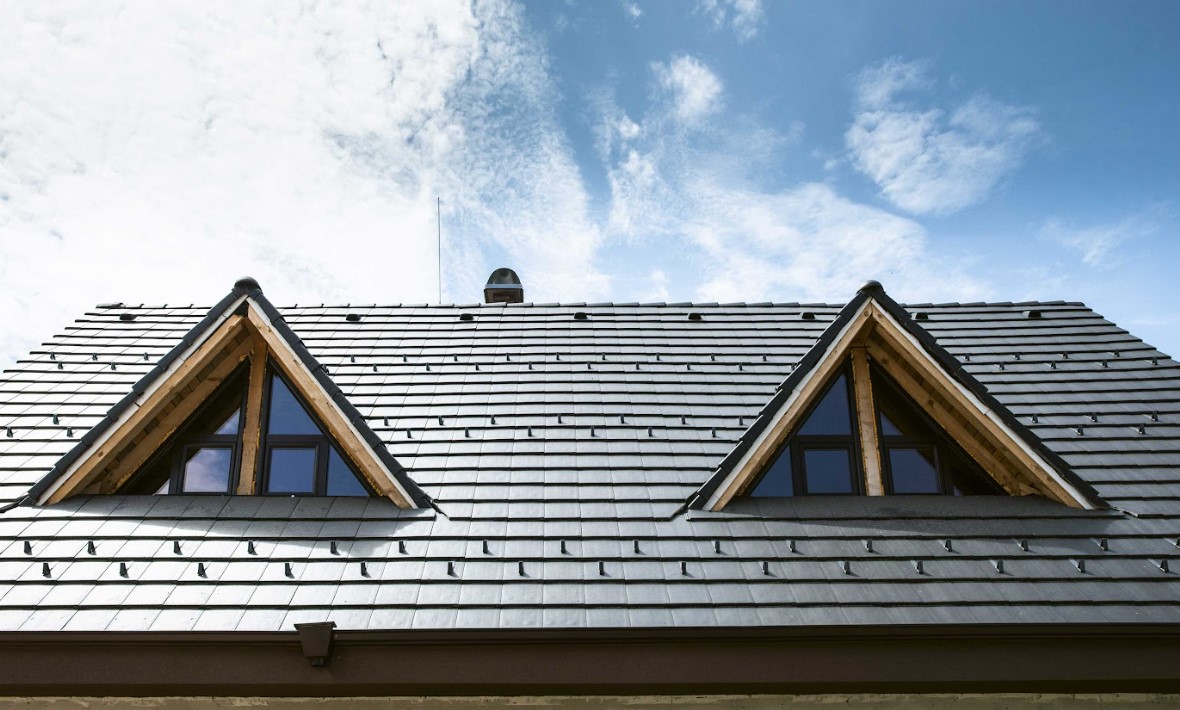
You’ll get nearly identical curb appeal with synthetic, deep textures, dimensional edges, and a high-end finish, without the extra weight or cost.
Roof Structure
Can your home support real slate?
Many homes can’t handle the heavy load of natural slate. Synthetic gives you the look without needing structural upgrades.
Climate
Is your area prone to ice or snow?
Synthetic slate is one of the best cold-climate roofing materials available. It resists moisture, won’t absorb water, and won’t crack when frozen.
Longevity
Are you planning to stay in your home long-term?
A properly installed synthetic slate roof can last 40–50 years or more with minimal upkeep. That’s real peace of mind through every season.

Why It’s One of the Best Winter Roofing Options
When it comes to cold-weather performance, not all materials are created equal. Here’s how synthetic slate compares:
| Roofing Material | Freeze–Thaw Durability | Snow & Ice Protection | Maintenance | Weight | Look |
|---|---|---|---|---|---|
| Asphalt Shingles | Fair | Moderate | Moderate | Light | Basic |
| Metal Roofing | Good | Excellent | Low | Light | Modern |
| Natural Slate | Excellent | Excellent | Low | Heavy | Premium |
| Synthetic Slate | Excellent | Excellent | Low | Medium | High-End |
For homeowners who want long-term protection without the headaches, synthetic slate delivers the best of both worlds: refined looks and winter-ready performance.
What Makes Synthetic Slate Roofing So Winter-Resistant?
It’s Built to Handle Freeze–Thaw Cycles
Natural stone can absorb moisture and crack in freezing weather. Synthetic slate resists water and stays strong when temps drop.
It Helps Prevent Ice Dams
Because it doesn’t absorb water and works with snow retention systems, synthetic slate reduces the risk of melting snow refreezing at your roof’s edge.
It Performs Even in Harsh Winds
Rated for wind speeds up to 190 mph, it stands up to the gusts that often follow winter cold fronts.
It’s Fire-Resistant
Many synthetic slate systems are Class A fire-rated when installed with the right underlayment, adding another layer of safety for your home.
It’s Designed for Long-Term Curb Appeal
Synthetic slate doesn’t fade or chalk, so your roof keeps its deep color and crisp edges for decades, even under harsh winter sun.
Comparing Natural Slate vs. Synthetic Slate
If you’re deciding between natural slate and synthetic slate, here’s a quick breakdown:
- Natural Slate: Long-lasting, beautiful, but heavy and costly. Requires a structurally reinforced roof deck.
- Synthetic Slate: Lightweight, cost-effective, looks nearly identical, and performs better in freeze–thaw climates.
At Infinity Roofing, we install both. But for most of our customers in cold, wet, or high-wind areas, synthetic slate is the easier, more practical choice.
Is It Time for a Synthetic Slate Upgrade?
Here are some signs your current roof might be holding you back:
- You’ve had multiple winter repairs for cracked shingles or flashing
- Your roof collects snow and creates heavy overhangs or ice dams
- Your attic has signs of moisture or frost buildup
- You want a high-end look but don’t want the high-end maintenance
If that sounds like your situation, synthetic slate could be the solution that brings you durability, beauty, and peace of mind for decades to come.